
Jewellery Guide
Understanding
Your Hallmark
A hallmark is more than a stamp. It is a legal guarantee of quality — one of the oldest forms of consumer protection in the world, dating back to 1300.
What is a hallmark?
A hallmark is a series of marks stamped or laser-engraved onto a piece of precious metal jewellery by an independent Assay Office — a government-authorised body whose sole job is to test and certify that the metal is exactly what it claims to be. In the UK, hallmarking precious metal articles has been a legal requirement since 1300, making it one of the oldest systems of consumer protection anywhere in the world.
When you buy a piece of sterling silver jewellery from Unlocking Treasures, you can be certain of what you are buying. Every piece that meets the legal weight threshold is sent to the Sheffield Assay Office — the UK's centre of excellence for hallmarking — before it reaches you. No ifs, no buts.
UK law states that any silver item weighing more than 7.78g, any gold item over 1g, and any platinum item over 0.5g must carry a hallmark before it can be described or sold as a precious metal article. Selling an unhallmarked item above these thresholds is a criminal offence. Lighter items are exempt, but we hallmark voluntarily wherever possible.
A complete UK hallmark
What you'll see on your piece
Sponsor
Fineness
Assay Office
Date Letter
A full hallmark consists of up to four individual marks. The fineness mark is the only one that is legally mandatory — the others provide additional information about origin and date.
Breaking it down
The four marks explained
01
The Sponsor's Mark
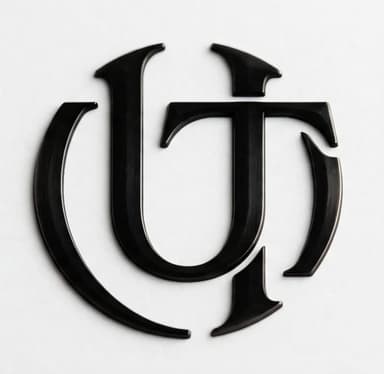
OursAlso called the maker's mark, this identifies the person or business that submitted the piece to the Assay Office for hallmarking. Ours is the UT monogram— registered with the Sheffield Assay Office in our name. Each maker's mark is unique and held on permanent record; it traces accountability directly back to the craftsperson who made your piece.
02
The Fineness Mark
This is the most important mark — the only one required by law. It is a three-digit number that tells you the exact purity of the metal in parts per thousand. Sterling silver is marked 925, meaning 925 parts per 1,000 are pure silver (92.5%). 9ct gold is marked 375 (37.5% pure gold). The shape of the cartouche surrounding the number also indicates the metal: an oval for silver, a shield for gold. This number is verified independently by the Assay Office — it is not simply taken on trust from the maker.
03
The Assay Office Mark
Our markThis symbol identifies which of the UK's four Assay Offices tested and certified the piece. All Unlocking Treasures jewellery is hallmarked by the Sheffield Assay Office, whose mark is the Tudor Rose— a five-petalled flower that has been the symbol of Sheffield since the office was established by Act of Parliament in 1773. The four active UK offices each have a distinct symbol: Sheffield (Tudor Rose), London (Leopard's Head), Birmingham (Anchor), and Edinburgh (Castle).
04
The Date Letter
A letter — sometimes in a distinctive font or shield style — that records the year in which the piece was hallmarked. Each Assay Office runs through the alphabet on a cycle, so a given letter combined with the Assay Office mark pinpoints the exact year. The date letter has been optional since 1999, but Sheffield continues to apply it — meaning every piece we submit carries a precise record of when it was certified. For collectors and historians, these letters are a fascinating window into a piece's age.
Our assay office
The Sheffield
Assay Office
Established by Act of Parliament in 1773, the Sheffield Assay Office has been testing and certifying precious metals for over 250 years. It is one of only four Assay Offices remaining in the UK — and one of the most respected hallmarking authorities in the world.
Sheffield's mark — the Tudor Rose — is a symbol of quality recognised by jewellers and collectors globally. When you see it on a piece, you know it has been independently tested to the highest standard by one of the oldest institutions in British craftsmanship.
We chose Sheffield because it is the Assay Office with a proud tradition of working with independent British jewellers and craftspeople. It is the right home for handmade jewellery.
Sheffield Assay Office
Est. 1773 · Tudor Rose
Our maker's mark
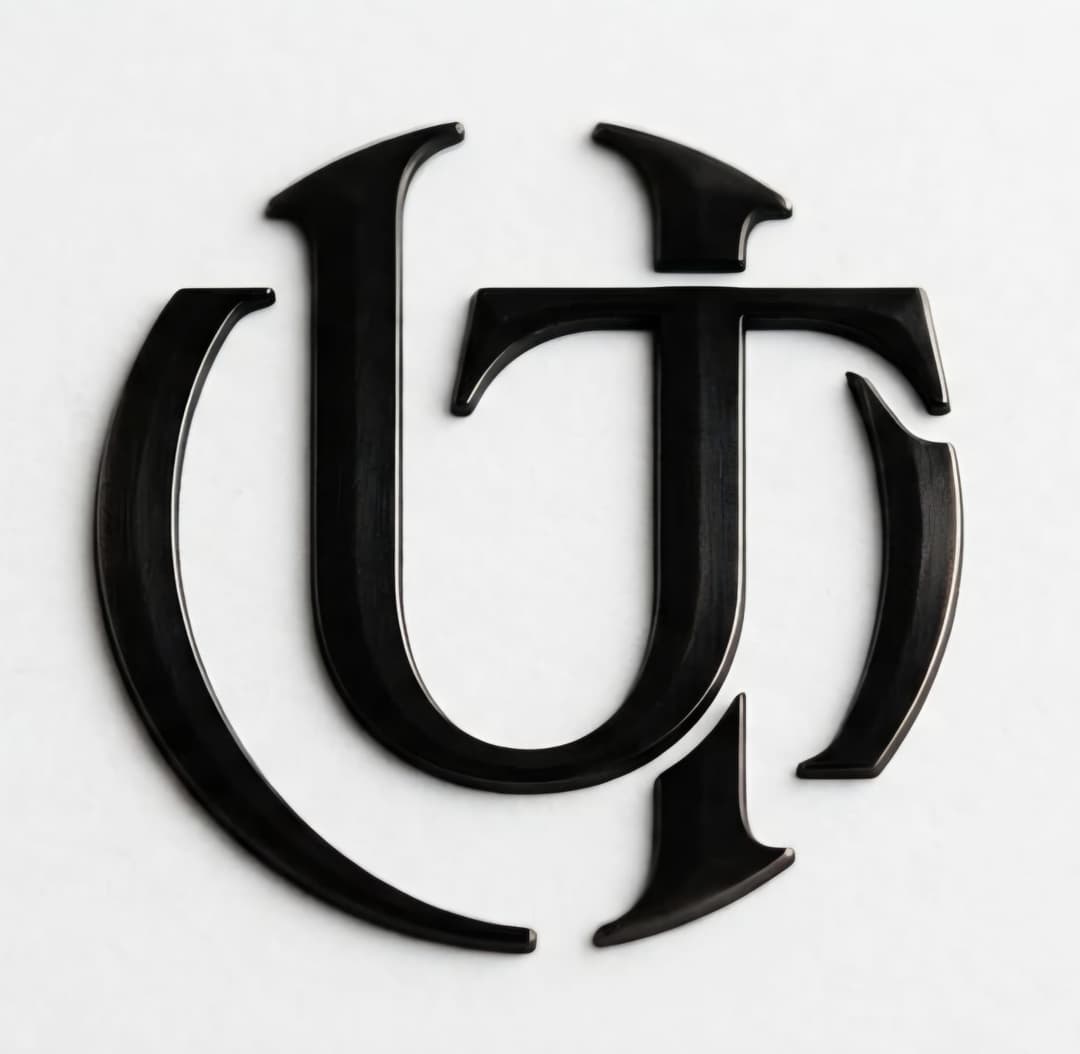
The UT Monogram
This is our registered sponsor's mark — the UT monogram stamped onto every qualifying piece of Unlocking Treasures jewellery before it leaves for the Sheffield Assay Office. The interlocking U and T letterforms are unique to us, registered in our name, and held on permanent record.
When you see this mark alongside the Sheffield Tudor Rose and the 925 fineness stamp, you have complete traceability: you know the metal is genuine sterling silver, you know it was independently tested in Sheffield, and you know exactly who made it.
That transparency — from maker to Assay Office to you — is the whole point of hallmarking. It is a promise that has held in British law for over 700 years.
Purity marks
What the numbers mean
The fineness mark is always a number in parts per thousand — so 925 means 925 out of every 1,000 parts are pure silver.
Sterling Silver
925
The remaining 7.5% is usually copper, added to give the metal strength and durability. Sterling silver is the standard for fine silver jewellery worldwide.
Fine Silver
999
Almost entirely pure silver. Very soft and rarely used for everyday jewellery — more common in coins and bullion. Beautiful lustre but prone to scratching.
9 Carat Gold
375
The most common gold used in UK jewellery. Harder and more durable than higher carats, and more affordable. The remaining 62.5% is typically silver, copper and zinc.
14 Carat Gold
585
Popular in Europe and America. A good balance of purity and durability — richer in colour than 9ct but more resilient than 18ct.
18 Carat Gold
750
A premium choice — distinctly warm in colour and very high in purity. Slightly softer than lower carats. Used in fine jewellery and engagement rings.
22 Carat Gold
916
Very high purity, rich deep yellow colour. Traditionally used in wedding bands. Softer and more susceptible to wear — not ideal for everyday pieces.
A note on gold fill
Some of our jewellery is made in gold fillrather than solid gold. Gold fill is not the same as gold plating — it has a thick, mechanically bonded layer of gold that is typically 100 times thicker than standard gold plating, making up at least 1/20th of the item's total weight.
Gold fill does not carry a hallmark in the same way as solid precious metals, because it is a composite material rather than a solid precious metal alloy. UK hallmarking law applies to solid gold, silver and platinum — not to gold-filled or gold-plated items. Gold fill pieces may be stamped by the manufacturer with markings such as “14/20 GF” or “18/20 GF” indicating the carat and fill proportion, but this is a manufacturer's mark, not an Assay Office hallmark.
This does not diminish its quality: gold fill is a durable, long-lasting material that will not peel, fade or discolour with normal wear — unlike thin gold plating. We are always transparent about the materials used in each piece.
Common questions
Hallmarking FAQ
- Does every piece of jewellery have to be hallmarked? +
- Not every piece — UK law sets minimum weight thresholds. Silver items over 7.78g, gold items over 1g, and platinum items over 0.5g must be hallmarked before sale. Lighter items are exempt, but we hallmark voluntarily wherever practically possible.
- What does 925 mean on silver jewellery? +
- 925 is the fineness mark for sterling silver — it means 925 parts per 1,000 are pure silver (92.5%). The remaining 7.5% is usually copper, which gives the silver the strength it needs for everyday jewellery.
- Why does Unlocking Treasures use the Sheffield Assay Office? +
- The Sheffield Assay Office has been hallmarking precious metals since 1773 and has a long tradition of working with independent British jewellers and craftspeople. Its Tudor Rose mark is internationally recognised as a symbol of quality. It is the right home for handmade jewellery.
- What is the Tudor Rose on my hallmark? +
- The Tudor Rose is the mark of the Sheffield Assay Office — the institution that independently tested and certified your jewellery. It appears alongside the fineness mark (925 for sterling silver) and the sponsor's mark to complete the full hallmark.
- Is my hallmarked jewellery guaranteed to be genuine silver? +
- Yes. That is precisely the point of hallmarking. The Assay Office tests every item before marking it — the hallmark is their independent guarantee, not simply a claim from the maker. Misrepresenting an unhallmarked item as precious metal is a criminal offence in the UK.
- Does gold fill jewellery have a hallmark? +
- Not an Assay Office hallmark. Gold fill is a composite material rather than solid precious metal, so UK hallmarking law does not apply to it in the same way. Gold fill pieces may carry a manufacturer's mark indicating the gold content (e.g. '14/20 GF'), but this is different from an independent Assay Office hallmark.
- How can I find the hallmark on my piece? +
- Hallmarks on rings are usually found on the inside of the band. On necklaces and bracelets they are often on the clasp or a small tag near it. The marks are very small — you may need a loupe or jeweller's magnifying glass to read them clearly.
Shop with confidence
Every silver piece, properly certified
Browse our handmade sterling silver jewellery — all hallmarked by the Sheffield Assay Office where required by law, and made with care right here in Darlington.